


Intelligent High-speed Washing Machine
Engineered for high-volume textile processing, this industrial washing machine delivers precision. Optimize throughput with our expert washing machine system.
View productChoosing the right unit for a laundry, dyehouse or garment-finishing line usually comes down to three inputs: kilograms per cycle, load form, and how automated the line already is. This guide works through the HGZ-450 and HGZ-550 models used in larger industrial dryer systems, and shows how the features built in by an experienced industrial dryer machine manufacturer change labour, safety and running cost on the floor.
Answer the three questions below the way your plant actually runs. The panel then shows whether the HGZ-450 / HGZ-550 window fits your output, and where to go next if it does not.
How many kilograms must one batch discharge?
What leaves the dryer at the end of a cycle?
Is the dryer a standalone station or part of a line?
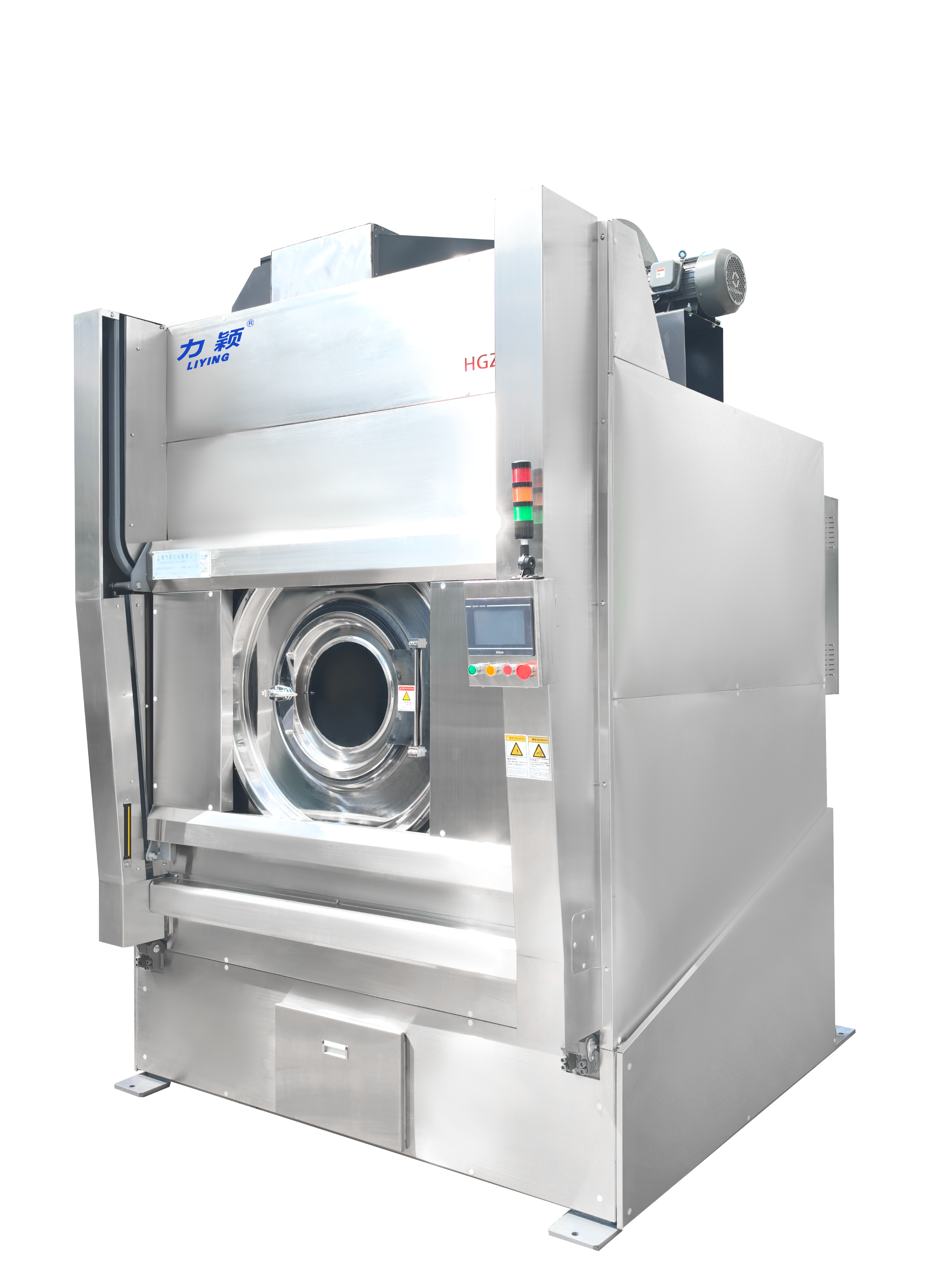
If you selected 200–250 kg per cycle, garment loads and an automated line, this platform is the direct fit. It is published with a load of up to 250 kg, a working capacity of 200 to 250 kg per cycle, PLC-based control, three-layer lint filtration, an infrared-sensed sliding rail door and automatic tiltable unloading.
If your answers fall outside that window, the specifications below still tell you what to look for — send your daily output and the line can be sized with you.
The platform is listed as model No. HGZ-450 & HGZ-550. Every value below is taken from the published product details for this machine, with the buyer question you should settle before an order is placed.

| Parameter | Published specification | Buyer check |
|---|---|---|
| Model designation | No. HGZ-450 & HGZ-550 | Confirm which of the two drum sizes is quoted for your order. |
| Load per batch | Up to 250 kg | Size the batch to your heaviest realistic load, not your average one. |
| Working capacity | 200 to 250 kg per cycle | Below 200 kg per cycle this platform is oversized for the job. |
| Drum diameter options | 1700 mm and 1800 mm | Drum size changes load handling and the required floor footprint. |
| Control system | PLC-based control | Ask which drying parameters can be stored as repeatable recipes. |
| Lint filtration | Three-layer lint filtration system | Fewer cleaning stops, less lint build-up and lower fire hazard. |
| Door | Infrared-sensed sliding rail door | Plan maintenance access beside the machine, not in front of it. |
| Unloading | Automatic tiltable unloading | Takes heavy manual handling out of the end of every cycle. |
| Cooling | Automatic cold air blowing mechanism | Garments cool before handling, cutting scald risk. |
| Steam control | Steam flow modulation and temperature control | Check your steam supply can be modulated, not only switched on and off. |
| Energy | Over 30% savings versus conventional machines | Ask which baseline machine the comparison was measured against. |
A feature list is only useful once it is translated into shift-level consequences. Each item below shows what the configuration removes from the working day, and what to confirm before you commit.
The drum tilts and discharges the batch itself, so the heaviest part of the cycle no longer depends on manual lifting. Fewer handling steps per batch, less strain on the operator, and a more predictable discharge into the next station.
When the drying cycle ends, cold air brings the load down in temperature before anyone touches it. That removes the scald risk of unloading a hot drum and shortens the wait between consecutive cycles.
Drying parameters, steam flow and fan speed are managed from stored settings rather than by hand, giving consistent humidity control and rapid dehumidification across shifts. Ask which recipes can be saved for your fabric types.
Lint is captured in three stages, which lengthens the interval between cleaning stops, reduces build-up inside the machine and lowers the fire hazard associated with trapped lint.
The door opens on a sliding rail and is sensed, so maintenance access is straightforward and does not interrupt the production flow around the machine.
The platform is published as improving energy efficiency by more than 30% against conventional dryer machines. Before ordering, ask which baseline machine the comparison was measured against.
A dryer is one station in a chain. The unit that dries perfectly still costs you money if the washing stage cannot feed it or the finishing stage cannot take its output, so check the interfaces before you check the brochure.
Intelligent washing machines in the same processing series, sized so a washed batch arrives in the dryer's working range of 200 to 250 kg.
PLC-controlled drying with automatic tiltable unloading feeding directly to the next stage.
Garment dyeing or finishing equipment that receives the cooled, discharged batch without re-handling.
Confirm steam, electrical supply and compressed air requirements, connection sizes and acceptable supply pressures for your chosen unit directly with the supplier.
Plan the machine footprint plus service clearance for the sliding rail door, the drum tilt and the unloading path — not just the cabinet dimensions.
Match the dryer inlet to your washer discharge and its outlet to the next station, so a batch never needs manual re-handling between stages.
Check that washing, drying and finishing cycle times sit in the same range. A dryer that outruns the finishing stage simply creates waiting batches.
Allow space for at least one full dryer batch to buffer, so upstream washing and downstream dyeing are never forced to stop for the dryer.
Set routine batch size inside the 200–250 kg working range rather than at the maximum load, so cycle time and humidity control stay predictable.
This platform is published as improving energy efficiency by over 30% compared with conventional dryer machines. That is a machine-to-machine comparison — what you actually keep depends on how the unit is run, shift after shift.
Load inside the 200–250 kg working range and let the PLC run the stored recipe instead of overriding drying time by hand. Repeatable cycles remove the habit of over-drying "to be safe", which is where most of the saving is lost.
The PLC manages steam flow and fan speed rather than running both flat out. Confirm before ordering that your steam supply can be modulated, because an on/off supply limits how much of the energy claim you can realise.
A loaded lint filter costs airflow and time. Keeping to the recommended cleaning interval holds drying performance steady, which is what protects the energy figure over a full year of production.
Specifications tell you what the machine can do; your output tells us which configuration fits. Send these six details and the selection work becomes a straightforward comparison.
Keep adjacent product options together for a faster catalog comparison.
Engineered for high-volume textile processing, this industrial washing machine delivers precision. Optimize throughput with our expert washing machine system.
View product
Fully customizable OEM solutions for high-volume textile processing. Our washing machine system ensures precision, efficiency, and scalability for manufacturers.
View product
Featuring a 1:2 liquor ratio, this unit supports industrial dyeing machine manufacturer standards for efficiency, precision, and reliable textile production.
View productreview the product details, images, and specifications presented on the official product page.
use the application and use-case information published on the official product page.
confirm the specifications and options listed for the exact product variant before placing an order.
check the official product page or ask the supplier about options shown for the selected product.
use the official contact or inquiry path provided on the site.
include the product page, intended use, required quantity, and any specifications you need the supplier to review.
